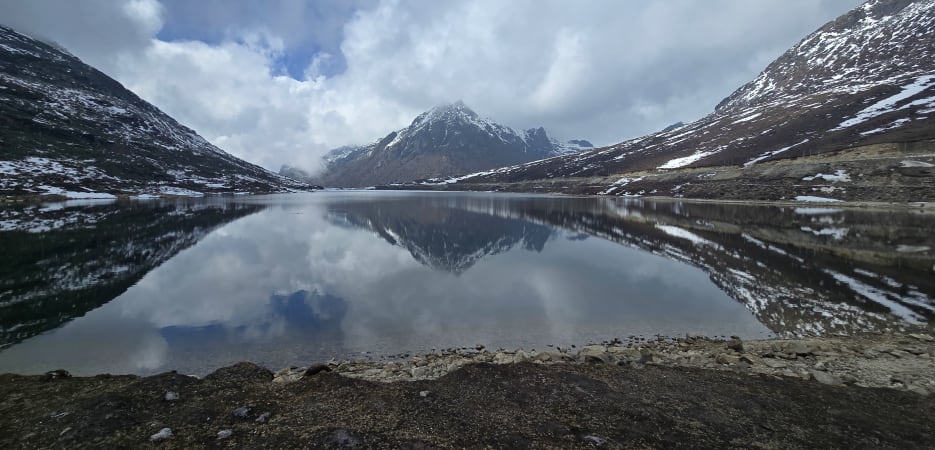
Whether it’s to escape the scorching summer heat or to experience the biting winter freeze, travelling to high altitude destinations like Leh (Ladakh), Spiti Valley, or North Sikkim, has its own charm. The breathtaking views, snow-capped mountains, pristine waters, and freshness in the air. Venturing into these high passes, however ethereal, requires some preparation and gradual adaptation. Let’s talk about some guidelines and health advisories for high altitude travel so that the next time you plan your holiday to these destinations, you are all set to enjoy from the word go.
What is High Altitude Travel?
High altitude travel refers to traveling to higher elevations of 5,000 feet (~1,500 meters) and above. However, in most cases the symptoms of high altitude sickness are more pronounced at elevations above 8,000 feet (~2,400 meters).
At this elevation the air is thinner and has lesser oxygen content, often leading to discomfort. As such, if you are trekking in the mountains or even doing a road trip there are some precautions you should take.
“So, it might look like you are not doing a lot in a day but that is because you are not travelling in plains.”
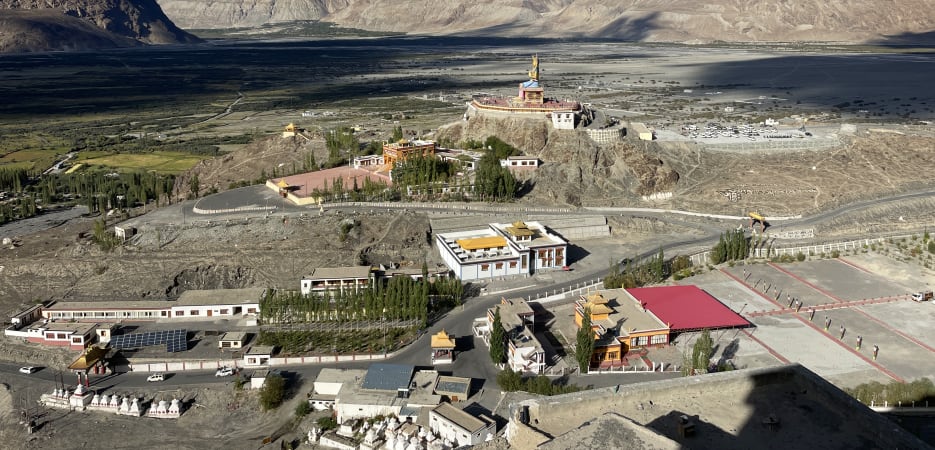
Diskit Monastery and Maitreya Buddha in Nubra Valley
Health Advisory Tips for travelling to high altitudes
Mumbai is at 46 feet (~14 meters), Delhi is at 709 feet (~216 meters), while Bangalore is at approximately 3,020 feet (~920 meters).
Whereas, Leh Ladakh is at 11,500 feet (~3,500 meters) and Spiti Valley is at 9,680 feet to 13,450 feet (~2,950 meters to 4,100 meters).
And this difference is exactly why you should take some steps before travelling to higher altitudes.
We’ve compiled a to-do’s and don’t’s to prepare your body for high altitude travel.
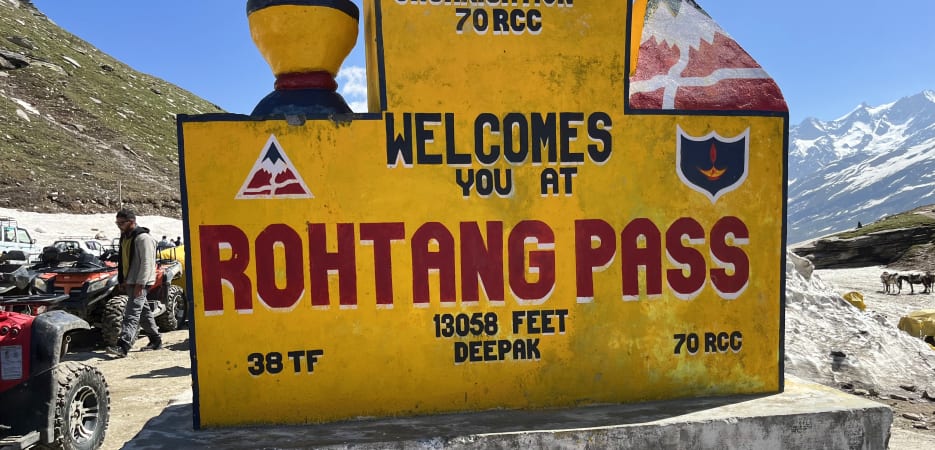
Rohtang Pass Welcome Sign (on Spiti Valley trip)
Acclimatisation
One has to earn her journey to the mountains. That is one reason we remain cautious about the fitness of our participants for a trip like Ladakh, Spiti, North Sikkim, Arunachal etc. which are at high altitudes. The oxygen is rare at higher altitudes and can cause headache. Acclimatisation is the process by which the human body adapts itself to the lower oxygen levels.
This is crucial during the first couple of days on any trip to high altitude, especially if you are flying in your destination, so that you can enjoy the rest of the trip. Please plan your itinerary in a way that gives you ample time to do that. So, it might look like you are not doing a lot in a day but that is because you are not travelling in plains.
For a lot of our trips such as North Sikkim and Arunachal, acclimatisation happens on the way as we take a road journey to the destination and are slowly gaining altitude. We talk in detail about this in all our high altitude trips, such as our women group trip to Spiti Valley or Ladakh group trip.
Physical fitness is key
Please ensure you carry medical necessities and in case of emergencies, there are army first aid centres at high altitude border places in India like Ladakh, Spiti, Arunachal and Sikkim.
If you are involved in some sort of physical exercise regularly, you should be fine. If you have any pre-existing conditions, please take a careful, calculated decision. Conditions like asthma can aggravate when travelling to high altitude places, but as long as you are careful and don’t exert yourself too much, you will manage well. Do consult your family doctor before undertaking such a trip.
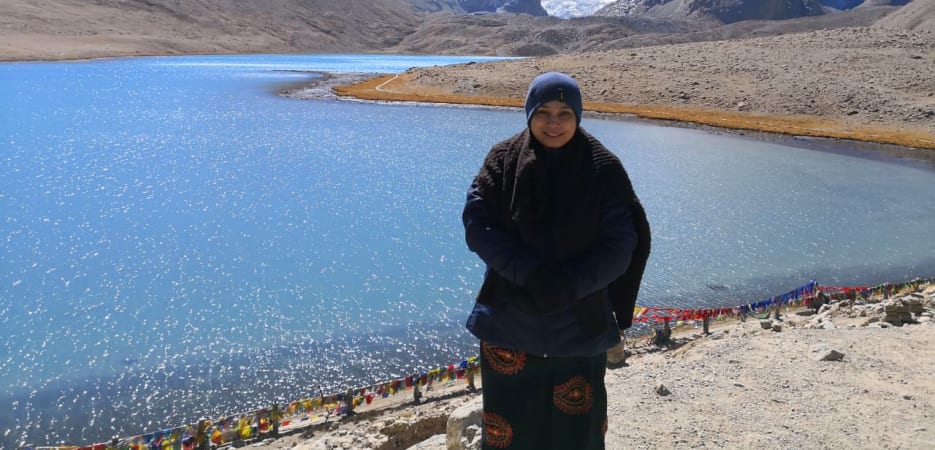
A Traveler at Gurudongmar Lake
Headache vs AMS
Headache and nausea are common on high altitudes. Please do not mistake it for Acute Mountain Sickness (AMS). AMS happens when your body starts showing symptoms of altitude sickness and you continue to stay at a high altitude. There is no need for panic if you are feeling tired or having a headache as you drive towards, say, Khardung La in Ladakh or Tawang in Arunachal. That is natural and will not cause any serious problem. The trick is to keep yourself hydrated and not completely empty in the stomach.
Many doctors suggest a preventive medicine, to take care of High Altitude Sickness and frequent breaks in case you feel uneasy. The best way to reduce the negative health effects of acute mountain sickness is to descend.
One will almost always acclimatise, if the first day at a higher altitude is spent resting, eating and drinking water; unless you are slowly gaining altitude, like in Arunachal or North Sikkim.
If you are still worried, start brisk walking half an hour each day, or take stairs to the office. This is recommended anyway, whether you are travelling to high altitude or not.
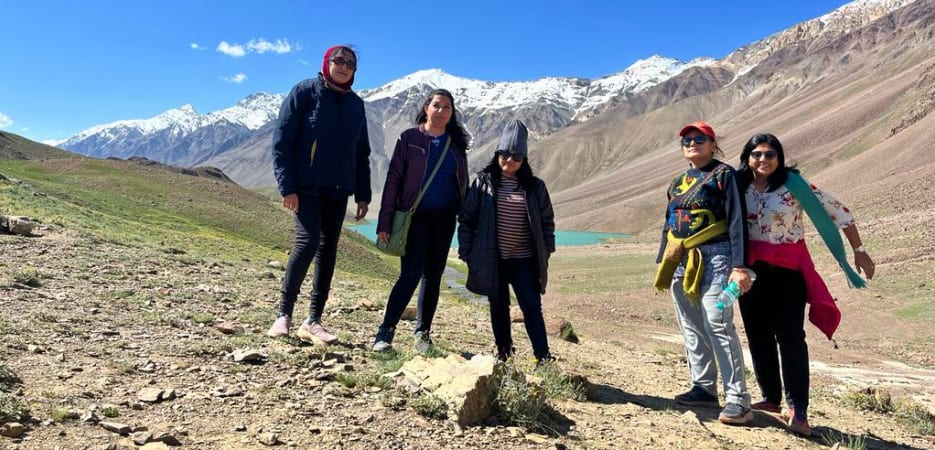
Group of Women Trekking in the Himalayas around Spiti
Should you travel to high altitudes?
So, here’s the big question – Should you travel to high altitudes?
The answer is yes, you can travel safely to higher altitudes if you have consulted with your doctor (especially if you have existing lungs or heart conditions), are physically active, and agree to follow the guidelines for safe travel to higher altitudes. In the end, listen, and always listen to your body and it will guide you.
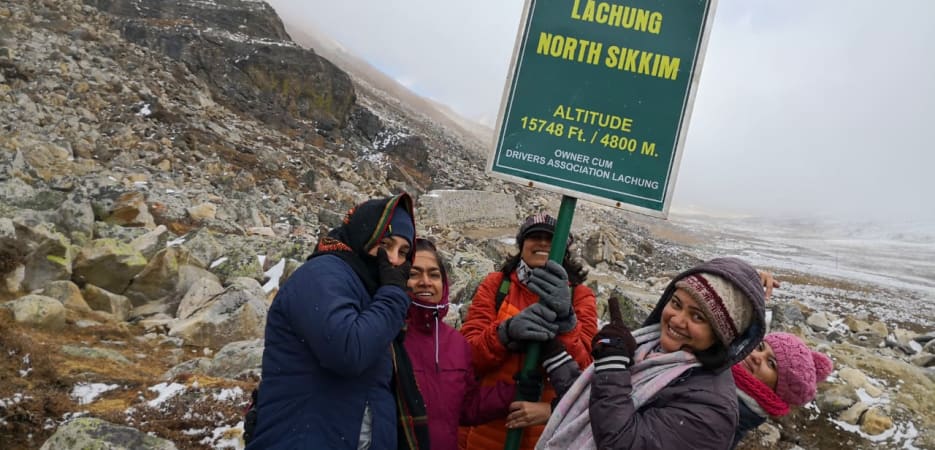
Tourists at Zero Point in Lachung, North Sikkim
If you think travelling to the mountains is for you, go fearlessly, but only after you’ve prepared right.
But if you think we need to prepare better and would rather have an adventure on the plains, seas, and lower mountains, take your pick from our women-only group tours in India for that unforgettable travelling experience!