I am, by every reasonable measure, a water baby. Not the graceful kind who does elegant laps and towels off looking photogenic. The other kind. The kind who wants to sit in a waterfall, not photograph it from a respectful distance. Splash in it. Get absolutely drenched by it. Occupy a mountain pool the way a water buffalo occupies a muddy riverbank on a hot afternoon — unhurried, unbothered. I have long suspected I was a water buffalo in a past life. Meghalaya is one of those places that has never once made me feel silly about this.
That’s the real reason it has my heart. Not just the landscape, but the permission. Permission to be in the water, not just near it.
“I'm heading back — my third trip — with a plan to chase a few unexplored corners of the state while returning to the old favourites I'm not done with yet.”
A solo woman’s travel across Meghalaya – Blue, in every register
I’ve spent years volunteering across rural India, walking through villages, living inside communities that measure time differently from how cities do — and I’ve come to believe travel was never about collecting places. It’s about agency. About taking up space and belonging to somewhere on your own terms.
I first visited Meghalaya in December, not expecting it to hand me crisp blue skies and golden light instead of the monsoon mist it is famous for. I was absolutely taken in by those shades of blue; some deep, some electric, some calming, some diluted by the sunlight.
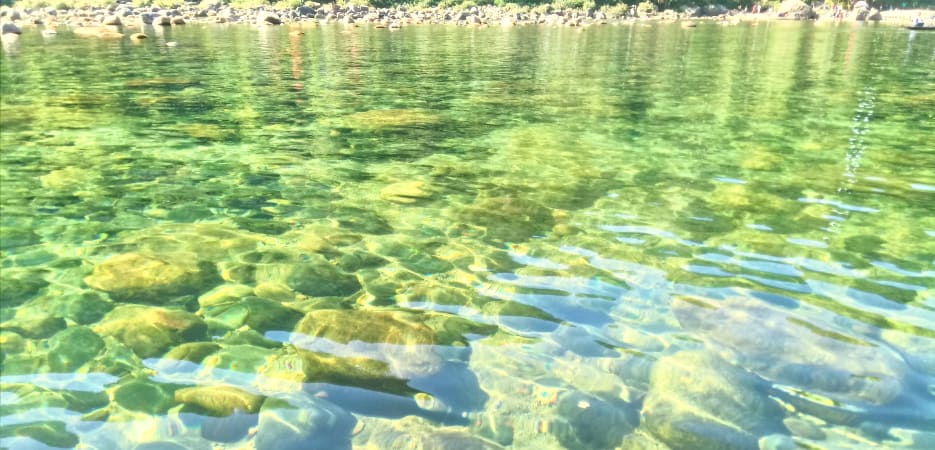
Crystal Clear Water of Umngot River
The Umngot River at Shnongpdeng does this thing where the boats look like they’re floating in mid-air, because the water underneath them is that clear. You assume it’s a filter. Then you’re in the boat yourself, counting pebbles ten feet down.
But it’s the water itself that got me.
The mountain pool near the Nongriat root bridge comes after a descent of roughly 3,000 stone steps that will introduce your calves to muscles they didn’t know they had. You reach the bottom, your legs are done negotiating with you, and there’s this impossibly beautiful topaz blue pool sitting amidst the rocks like it has been waiting.
I got in. Obviously!
Jumped. Swam. Splashed. I probably behaved like someone considerably younger than my middle-aged self. And somewhere in all that cold water and ridiculous happiness, I laughed like a child. Not a polite, adult laugh. The completely unselfconscious kind. The kind where you don’t care what you look like or whether anyone is watching because you’re having too much fun to remember that you are supposed to be a grown-up, and a woman.
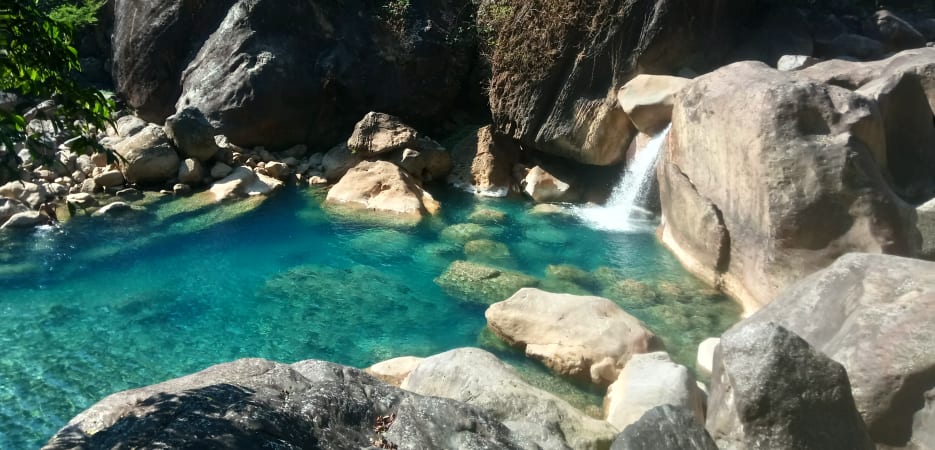
Turquoise Natural Pool and Small Waterfall
Eventually, I climbed out and sat on the shore, spent. Some tears rolled down and I don’t quite know why. Maybe it was the relief of finally not observing myself. I don’t think I need more of an answer than that.
And then there was Wei Sawdong. Getting down to it involved those tricky bamboo ladders. I was awkward and distinctly unseemly, and felt exactly like that buffalo who had somehow found herself on the wrong terrain. I was not built for those paths but climbed down anyway.
The buffalo in me was rewarded, and how!
The waterfall and the pools below were so spectacular that, for once, there wasn’t much to say. You just look. The ridiculous descent, the awkward limbs, the undignified scrambling — all of that suddenly seemed like a perfectly reasonable price to pay.
There are places that are beautiful and majestic to stare at, and Meghalaya has those. But there are also places that seem to ask you to get involved. To get wet. To sit down. To stay a little longer.
I think that’s what I keep going back for.
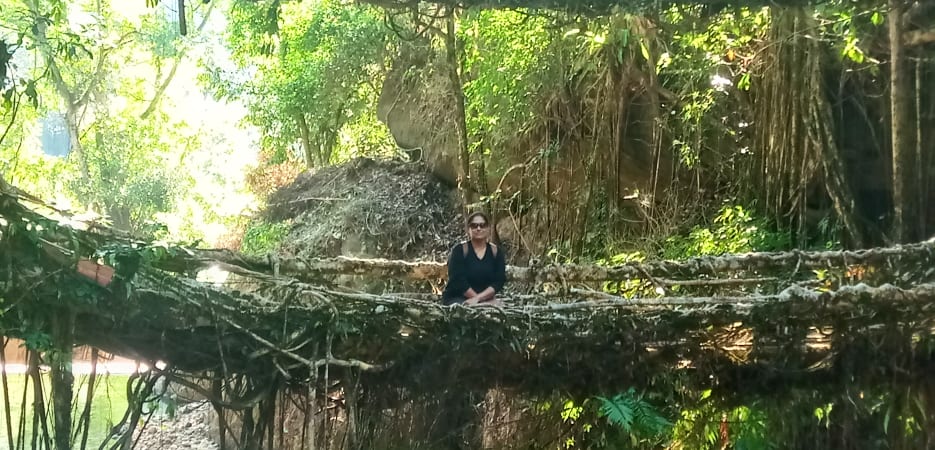
Double-Decker Living Root Bridge of Meghalaya
No network, and I still felt safe
Here’s the part that actually stayed with me longer than the blue.
As women who travel, safety runs like a background process we never fully switch off. Is it getting dark? Who’s behind me? Is this trail okay? Can I walk here alone? What am I wearing? Is someone staring? Even when nothing is wrong, some part of your brain is doing the calculations.
And it’s not just about travel.
Women spend an extraordinary amount of brain space every day thinking about how to keep themselves safe, how to avoid being stared at, how not to invite the wrong kind of attention, how much space to take up, how late to stay out, whether to walk alone, whether to smile, whether not smiling will be interpreted as something else.
Some of it is conscious. Most of it isn’t anymore. It has become background noise.
In Meghalaya, that radar went fairly quiet.I remember being deep in the trail, with no network on my phone, and realising that I wasn’t anxious about the lack of it. I wasn’t checking the time. I wasn’t calculating how quickly I could get back. I wasn’t scanning the path behind me.I was just there.
That isn’t nothing. That’s rare.
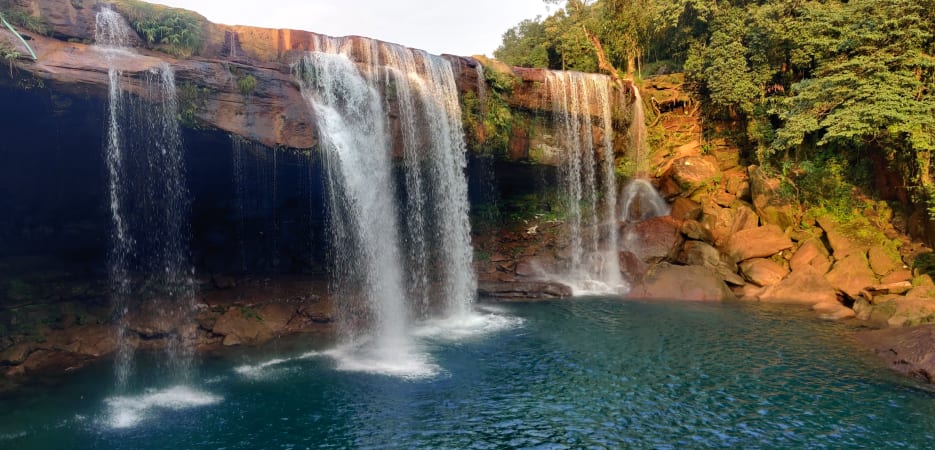
Krang Suri Waterfall in Meghalaya
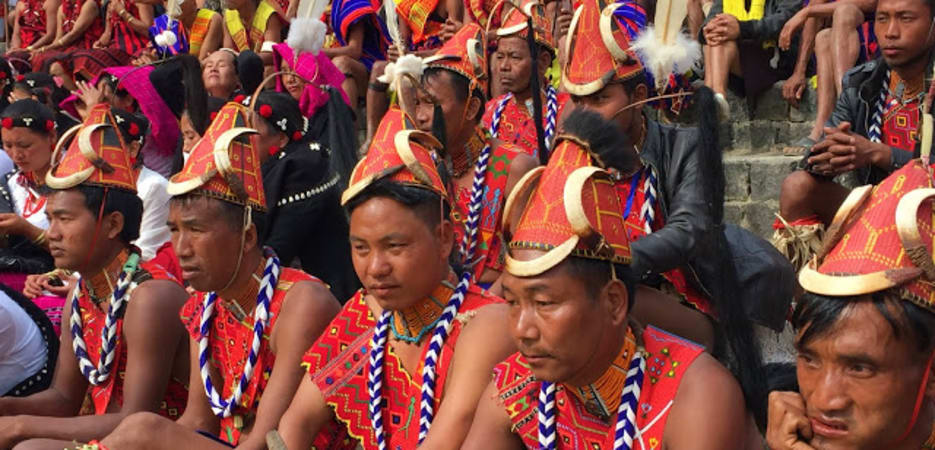
I don’t think it’s an accident. The Khasi are a matrilineal society — lineage, family names and inheritance traditionally pass through the mother’s line, with the youngest daughter, the Khatduh, having a particularly important place in the family. But you don’t really experience that as a fact from a guidebook. You notice it in much more ordinary ways.
Women are everywhere. Running shops, managing market stalls, driving, working, hosting, going about their business, and just hanging out in public. Not as some grand statement of empowerment. Just as people do things. You don’t feel like you’re watching an exception. You’re watching normal life where women take up public spaces just as men do.
And that does something to you when you’re a woman travelling alone. You don’t feel that you are particularly unique for being alone. Nobody seems to be keeping score of what you’re wearing, where you’re going, or whether you have company. If I ever caught a glance lingering a beat too long, it was generally from a fellow tourist. The locals, for the most part, seemed gloriously uninterested.
And perhaps that was the real luxury.
Not just being safe, but having so little of my brain occupied with being a woman. I could just be a person in a place. I could be wet and muddy. I could be alone. I could sit somewhere for too long. I could take a trail. I could change my mind.
Nobody seemed particularly invested in making me feel like I had to explain any of it. Maybe that’s why the water feels different too. You can only really relax into a river when some part of you believes you’re allowed to be there.
(Also read about the Self Defence & Safety workshop for travelling women organised by F5 Escapes with Durga India)
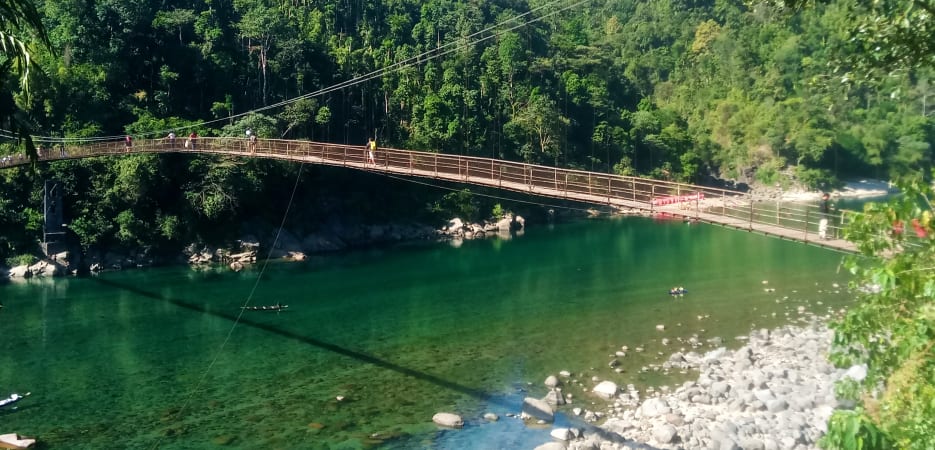
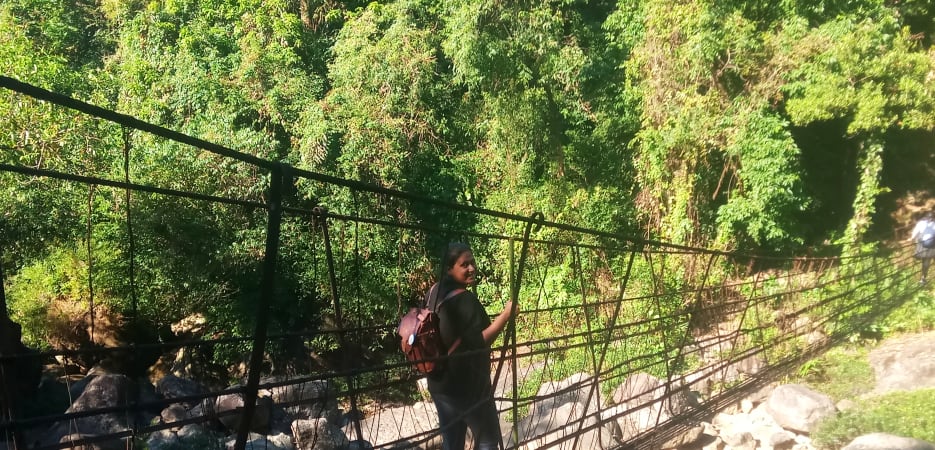
Suspension Bridge Over the Umngot River in Dawki
Meghalaya’s Mawphlang Sacred Grove – The forest that watches
I walked into the Mawphlang Sacred Grove on a cold day. The forest seemed to have its own weather; part damp, part glowing in the filtered sunlight. The temperature dropped almost as soon as we entered. The sounds changed. Even our voices seemed to become quieter.
Our guide told us stories about the forest spirits that live there, watching over the forest and protecting the people around it, Labasa being the chief among them. The Khasi sacred groves are not simply forests that happen to have religious significance. They are forests protected through belief — ancient patches of biodiversity where the rules of the sacred are also rules of conservation. Meghalaya has dozens of these sacred groves, traditionally protected by communities.
You cannot take anything out. Not a flower. Not a twig. Not a stone. Not even a dead, fallen leaf.
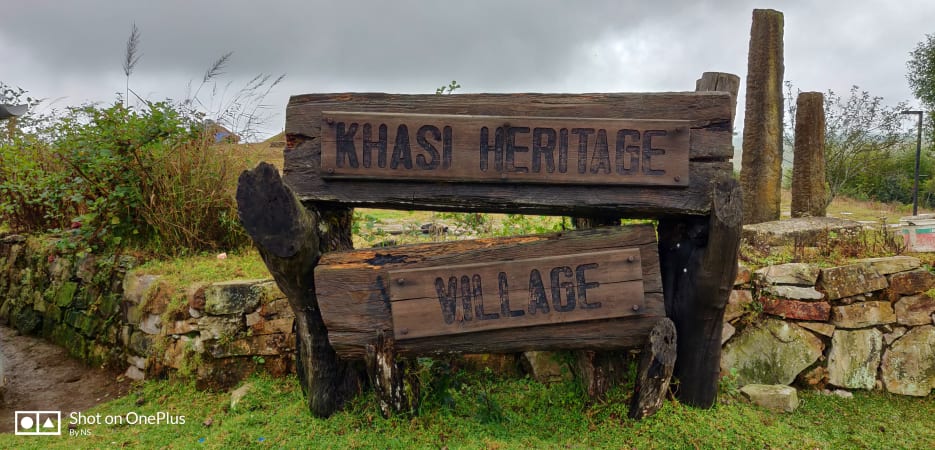
Wooden Sign at Khasi Heritage Village (PC: NS
It sounds almost absurd until you walk through the forest and see fallen branches and leaves simply becoming part of the forest floor.
Nothing is yours to collect. You don’t need to turn every beautiful thing into something you can possess. A piece of bark does not have to become a souvenir. A flower does not have to be pressed into a book. You don’t have to see beauty and make it yours. Leave it where it belongs, and still carry it in your heart. Maybe remember it more than you remember that forgotten shell in your study table drawer. Who would have thunk!
I wouldn’t say that the experience suddenly made me believe in forest spirits. I’m not sure I am capable of committing to most organised religions. But if there is a religion I could perhaps commit to, it might be this: nature as something sacred enough to leave alone.
A belief that the forest doesn’t exist for us. We are the ones who have entered its space. Perhaps the trees, the moss, the water, the creatures and the dead leaves don’t need us to improve them. They need us to stop taking indiscriminately.
In a strange way, it connected back to the pools. The water had asked me to surrender. The forest asked me to refrain. Both required me to understand that I was not the most important thing in that landscape.
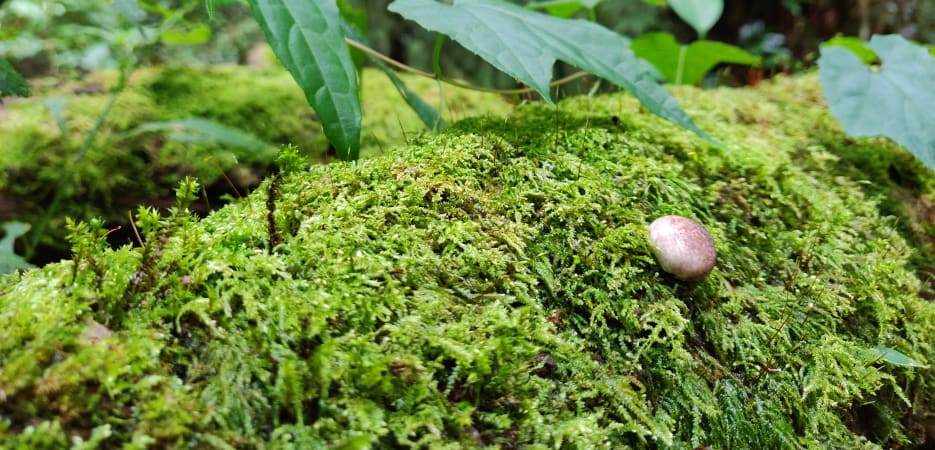
Lush Moss in Forest
Going back a third time
I’m heading back — my third trip — with a plan to chase a few unexplored corners of the state while returning to the old favourites I’m not done with yet.
Some places you don’t outgrow. You just keep finding new reasons to return.
This time I’m also going in with a newly discovered understanding of style and some basic makeup skills I didn’t have before, and I’m genuinely excited to test them out. Meghalaya, for all its wildness, is very stylish. The first time I visited, I felt like I was witnessing a fashion show on the street. They are all just so well turned out – men and women; and they make it look so effortless. I had arrived in sensible layers, feeling reasonably put together, and was quietly out-styled by grandmothers running shopfronts. I’m not making that mistake twice.
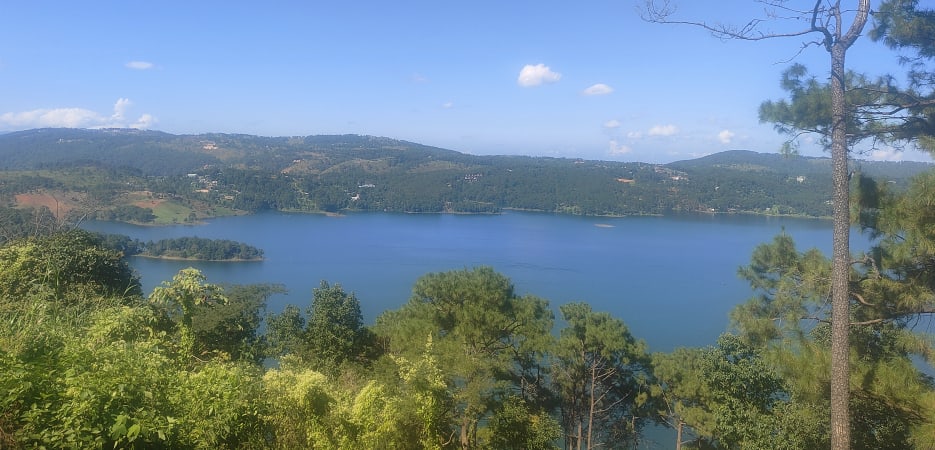
Scenic View of Umiam Lake in Meghalaya
That’s another thing I like about Meghalaya. It doesn’t seem to insist that you pick a version of yourself and stick to it. You can be the rugged hiker in trekking shoes, a water buffalo with mud on your face, and the diva in heels and cute dress, on the same trip, sometimes the same day. No judgment either way.
If I’m honest, that is another kind of freedom. To be a woman in all the contradictory, occasionally ridiculous ways that we are women. To know that surrender and vanity can co-exist. Maybe that’s what Meghalaya has given me beyond anything else – a little more room in my head.
When I think of Meghalaya, I think of blue — sapphire, teal, electric turquoise, take your pick — and the specific, rare feeling of my shoulders dropping somewhere with no network, no anxiety, and very little to think about except where I wanted to go next.
Maybe that’s what follows you home more than the photograph of the river or the memory of the waterfall. It’s the memory of how little brain space you needed to give yourself. Of not having to constantly monitor how you were being seen. Of simply being there.
I’m going back for both.
The blue, and the ease.
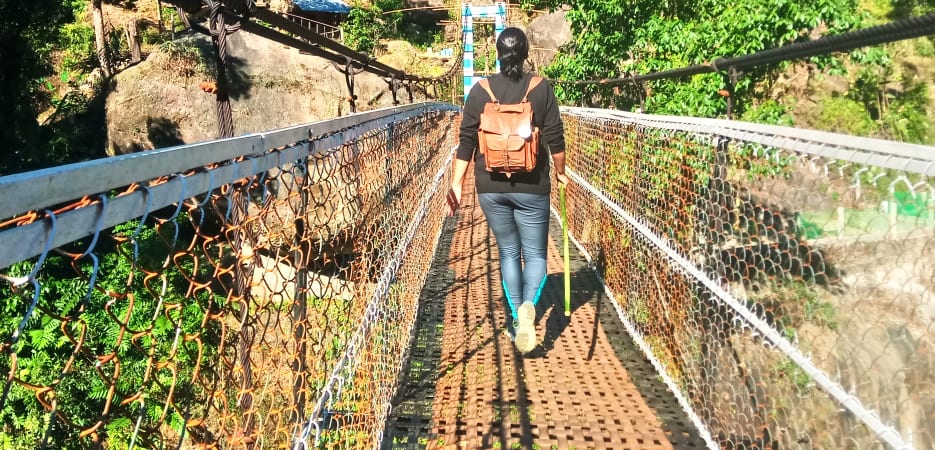
Woman Crossing a Suspension Bridge in a Lush Forest
Practical notes for a Solo or Group tour to Meghalaya:
A few practical notes, for anyone planning their own trip:
– Best time to visit: Winter (November–February) for clear skies and dry trekking paths; March–June for the most reliable weather overall, especially if you are looking to hike and swim. The Umngot River at Shnongpdeng is at its clearest in winter and early summer, before the monsoon churns it up.
– Monsoon visit: Good for do-nothing, lush green vacation to the wettest place on Earth.
– Getting there: Guwahati (Assam) has the nearest major airport, roughly 3 hours by road from Shillong.
– Nongriat Double Decker Root Bridge: Roughly 3,000–3,500 stone steps each way from Tyrna village. Budget half a day, and expect sore legs the next morning.
– Wei Sawdong Falls: A shorter but steeper descent involving bamboo ladders; best combined with a Nongriat trip or a Cherrapunjee-area day out.
– Mawphlang Sacred Grove: About 25 km from Shillong; a guided walk (guides are usually arranged on-site) takes an hour or two.
– How long you need: 7 days covers Shillong, Cherrapunjee, Nongriat, and Shnongpdeng, without rushing. Add Mawlyngbna, Kongthong, or the Garo Hills if you have more time.
And if you want to join the F5 tribe on our all-women trip to Meghalaya, pack your bags and get ready for an adventure into the blue waters, the majestic waterfalls, the breathtaking landscape and memories for a lifetime.
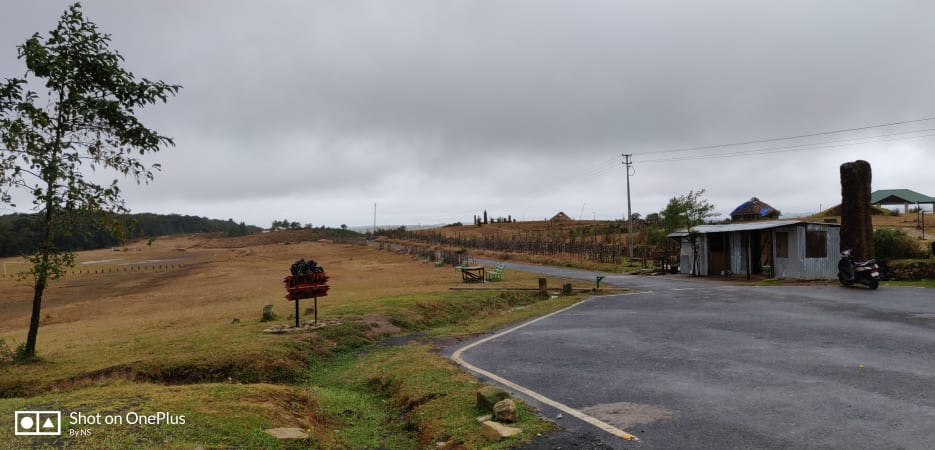
Rural Roadside Landscape (PC: NS)
This post is originally written by Akanksha Bumb – dog parent, traveller, water baby and currently wearing the hat of the Co-Founder and COO at F5 Escapes.
Want to know more about the F5 team members? Get in touch.